Google has a tradition of perpetrating hoaxes, especially on April Fools’ Day, as well as various easter eggs.


Google has a tradition of perpetrating hoaxes, especially on April Fools’ Day, as well as various easter eggs.
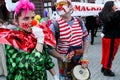
April Fools’ Day (sometimes called April Fool’s Day or All Fools’ Day) is an informal holiday celebrated every year on April 1. Popular since medieval times, the day is not a national holiday in any country, but it is widely recognized throughout European cultures and celebrated as a day when people play practical jokes and hoaxes on each other, both the jokes and their victims being known as “April fools”. Hoax stories are often presented by the press and other media on this day.

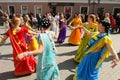

 Gloria Laura Vanderbilt (born February 20, 1924) is an American artist, author, actress, heiress and socialite, noted as an early developer of designer blue jeans. She is a member of the Vanderbilt family of New York and the mother of CNN television anchor Anderson Cooper.







April Fools’ Day (sometimes called All Fools’ Day) is an informal holiday celebrated every year on April 1. Popular since medieval times, the day is not a national holiday in any country, but it is widely recognized throughout European cultures and celebrated as a day when people play practical jokes and hoaxes on each other and called an April fool. Hoax stories are also often found in the press and media on this day. As with other matters of grammar about individual and group celebrations (such as whether Mother’s/Mothers’ Day is about one mother or all mothers), the popular press continues to debate whether the name refers to an individual fool or to many fools. Since one or many would both be correct, writers sometimes choose the singular possessive (April Fool’s Day) and sometimes the plural possessive (April Fools’ Day).
April Fools’ Day (sometimes called All Fools’ Day) is an informal holiday celebrated every year on April 1. Popular since medieval times, the day is not a national holiday in any country, but it is widely recognized throughout European cultures and celebrated as a day when people play practical jokes and hoaxes on each other and called an April fool. Hoax stories are also often found in the press and media on this day. As with other matters of grammar about individual and group celebrations (such as whether Mother’s/Mothers’ Day is about one mother or all mothers), the popular press continues to debate whether the name refers to an individual fool or to many fools. Since one or many would both be correct, writers sometimes choose the singular possessive (April Fool’s Day) and sometimes the plural possessive (April Fools’ Day).


 Pro-ana refers to the promotion of awareness of the eating disorder anorexia nervosa. It is often referred to simply as “ana” and is sometimes personified by anorexics as a girl named ‘Ana’. The lesser-used term pro-mia refers likewise to bulimia nervosa and is sometimes used interchangeably with pro-ana.









 Dancing with the Stars is the name of several international television series based on the format of the British TV series Strictly Come Dancing, which is distributed by BBC Worldwide, the commercial arm of the BBC. Currently the format has been licensed to over 42 territories. Australia was the first country to adapt the show which turned out to be a huge success with veteran Australian TV host Daryl Somers taking the show live to air once a week.






April Fools’ Day (sometimes called All Fools’ Day) is an informal holiday celebrated every year on April 1. The day is not a national holiday in any country, but it is widely recognized and celebrated as a day when people play practical jokes and hoaxes on each other, called April fools. Hoax stories are also often found in the press and media on this day.
 Jacoba Francisca Maria “Cobie” Smulders (born April 3, 1982) is a Canadian actress and former model, known for her roles as Robin Scherbatsky on the television series How I Met Your Mother and Maria Hill in the Marvel Cinematic Universe.


 Frankie Warren Knuckles, Jr. (January 18, 1955 â March 31, 2014) was an American DJ, record producer, and remixer. He was born in the Bronx borough of New York City and later moved to Chicago. He played an important role in developing and popularizing house music in Chicago during the 1980s when the genre was being created. In 2005, Knuckles was inducted into the Dance Music Hall of Fame for his achievements.